The vibrant colors and intricate patterns of Mexican rebozos offer more than just style; they serve as powerful symbols of cultural identity and heritage.
Colors and designs connect the wearer to traditions and stories that have been passed down through generations.
This guide covers rebozo colors and patterns, what is known about their meaning, and the colors our rebozos come in.

Rebozos are not only practical accessories but also significant cultural artifacts that represent Mexican history and social customs. The craftsmanship involved in making these shawls is meticulous, as artisans weave their culture into every piece.
By understanding these symbols, you gain insight into the rich tapestry of Mexican life and the vital role that rebozos play in it.
As you dive into the symbolism behind colors and patterns in Mexican rebozos, you will discover their importance in expressing identity, heritage, and traditions.
This journey will deepen your appreciation for these unique garments and their place in the broader cultural landscape of Mexico.
Key Takeaways
- Rebozos symbolize cultural identity and heritage through their colors and patterns.
- Each design element reflects specific emotions and traditional stories.
- Understanding these symbols enhances appreciation for Mexican culture and craftsmanship.
Historical and Cultural Context

The history of the rebozo is rich and complex, deeply rooted in Mexican culture. This section explores its origins, significance in society, and the cultural practices associated with it. Understanding these aspects helps you appreciate the rebozo beyond its aesthetic beauty.
Origin and Evolution of the Rebozo
The rebozo has its origins in the pre-Hispanic era, crafted by indigenous women from materials like cotton and agave fibers. These shawls evolved over time, influenced by the arrival of Spanish colonizers.
During the colonial period, rebozos blended different styles and techniques, reflecting both indigenous and Spanish cultures.
As centuries progressed, the rebozo became a symbol of identity for Mexican women. It showcased their craftsmanship and was often used to wrap children, highlighting its role in motherhood.
The traditional techniques employed have been passed down through generations, preserving this cultural heritage.
Rebozos in Mexican Society
Frida Kahlo and María Félix, iconic figures in Mexican history, showcased rebozos as symbols of femininity and pride.
The colors and patterns often denote regional styles and can represent various traditions.
Cultural Practices and Symbolism
The cultural practices surrounding rebozos highlight their deep symbolism. For many, wearing a rebozo during childbirth symbolizes protection and care.
Customs linked to rebozos vary by region, with each design telling a story.
The rebozo remains an enduring symbol in Mexican culture.
Design and Craftsmanship

The design and craftsmanship of Mexican rebozos showcase the rich cultural heritage and skills of artisans. They use techniques that are both traditional and innovative, leading to beautiful textiles that carry deep meanings.
Weaving Techniques and Materials
Artisans employ various weaving techniques to create rebozos. Among the most notable is the backstrap loom (telar de cintura), used for the fine rebozos of Santa María del Río (Secretaría de Cultura).
This method enables weavers to have direct control over tension, allowing for intricate designs.
Other techniques include the pedal loom, which is capable of producing wider fabrics more quickly.
The most common fiber is cotton. Fine rebozos from Santa María del Río are woven in artisela (rayon) or silk (Sistema de Información Cultural, Secretaría de Cultura). Read how Santa María del Río rebozos are woven. Some artisans also use agave fibers to create unique textures.
Santa María del Río rebozos are colored with both natural and chemical dyes, and woven in cotton, silk and artisela (Secretaría de Cultura).
Rebozo Patterns, Colors, and Their Meanings
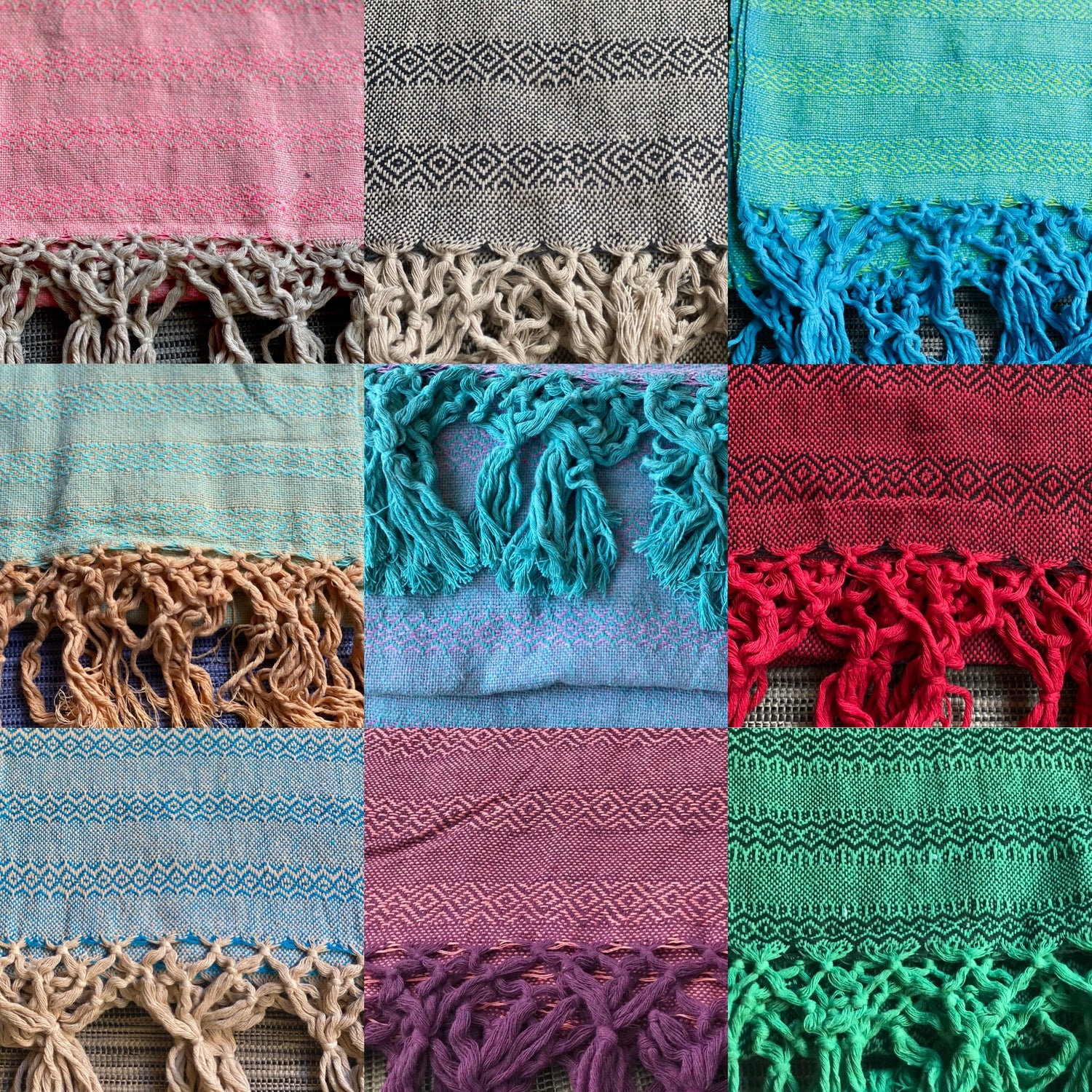
Rebozo color meanings vary by region, community and maker. There is no single fixed code that assigns one meaning to each color.
Artisans create intricate designs using motifs that tell stories and reflect personal and communal experiences.
The hand-knotted fringe at each end finishes the piece.
What each color is worn for
Every color named here comes from the product listing. Each of these rebozos is handwoven in Mexico by local artisans on a foot-pedal loom, in cotton.
- Red tones: Our Red Kiss rebozo is a bold solid red. Red paired with lighter tones: the Fire & Snow red-and-white rebozo, the Strawberry Fields pink-and-red rebozo and the All Is Calm Yute rebozo in red and beige.
- Blue tones: the Blue Mockingbird solid-blue rebozo, the Deep Ocean deep-blue rebozo and the Deep Aqua rebozo in aqua and black.
- Purple: the Uva Morada grape-purple rebozo, with a subtle woven diamond texture and matching purple fringe.
- Orange and warm tones: the Pumpkin Juice pumpkin-orange rebozo, the Orange Blossom orange-and-white rebozo, the Orange Sunrise orange-and-white rebozo, the Orange Gray rebozo and the Café de Olla rebozo in caramel-brown and natural cream.
- Contrast: our black-and-white doula rebozo, plus the Yin Yang black-and-white rebozo, the Light Pink & Black rebozo and the Noche de Mezcal rebozo with a black base and golden-tan stripes.
- Soft neutrals: the Let it Snow white-and-beige rebozo and the Winter Awakening gray rebozo.
The listings describe these rebozos for everyday shawls, babywearing practice and traditional doula textile kits. The Uva Morada listing also names postpartum belly binding.
Innovation and Modern Relevance
In recent years, rebozos have seen a resurgence in contemporary fashion. Many artisans merge traditional craftsmanship with modern styles, allowing rebozos to be versatile accessories for everyday wear.
This blend of art and practicality demonstrates the continued artistic expression found in these textiles.
As craftsmanship evolves, it helps reinforce a sense of resilience and connection to cultural roots while appealing to a global audience. The rebozo remains a timeless symbol of identity and heritage.
Frequently Asked Questions

This section addresses common inquiries about rebozo colors, patterns and their uses.
What is the significance of different colors used in Mexican rebozos?
Rebozo color meanings vary by region, community and maker. There is no single fixed code that assigns one meaning to each color.
How are patterns and designs on Mexican rebozos imbued with cultural meaning?
Patterns on rebozos reflect the techniques and traditions of the place and maker that produced them.
Each design element resonates with the artisan's heritage and the values they hold.
In what ways are Mexican rebozos used during pregnancy and childbirth?
Rebozos are traditionally used for support during pregnancy and childbirth. Women may wrap themselves in a rebozo for comfort and stability.
This practice helps relieve physical strain and ensures a sense of security during these significant life events.
Can you explain the traditional ways of wearing a Mexican rebozo?
A rebozo can be worn in several ways, such as draped over the shoulders or wrapped around the body. You might see it used as a shawl, a headscarf, or even as a baby carrier.
Each style serves different functions and reflects personal preference.
What are the various techniques associated with the use of rebozos?
Techniques for creating rebozos include weaving, dyeing, and finishing methods.
Artisans often use handwoven techniques to ensure quality. The unique craftsmanship showcased in each rebozo adds to its value and cultural significance.
What does the rebozo represent in Mexican cultural identity and heritage?
The rebozo is a strong symbol of Mexican culture and identity. It represents tradition, artistry, and community.
For many, wearing or creating a rebozo connects them to their heritage and the stories of their ancestors.