Someone asked me again this week whether I would ever add a “collector” line — silk, named village, the kind of cloth you photograph more than you wash. I said no. Not because silk is wrong. Because that is a different house, and I already chose this one.
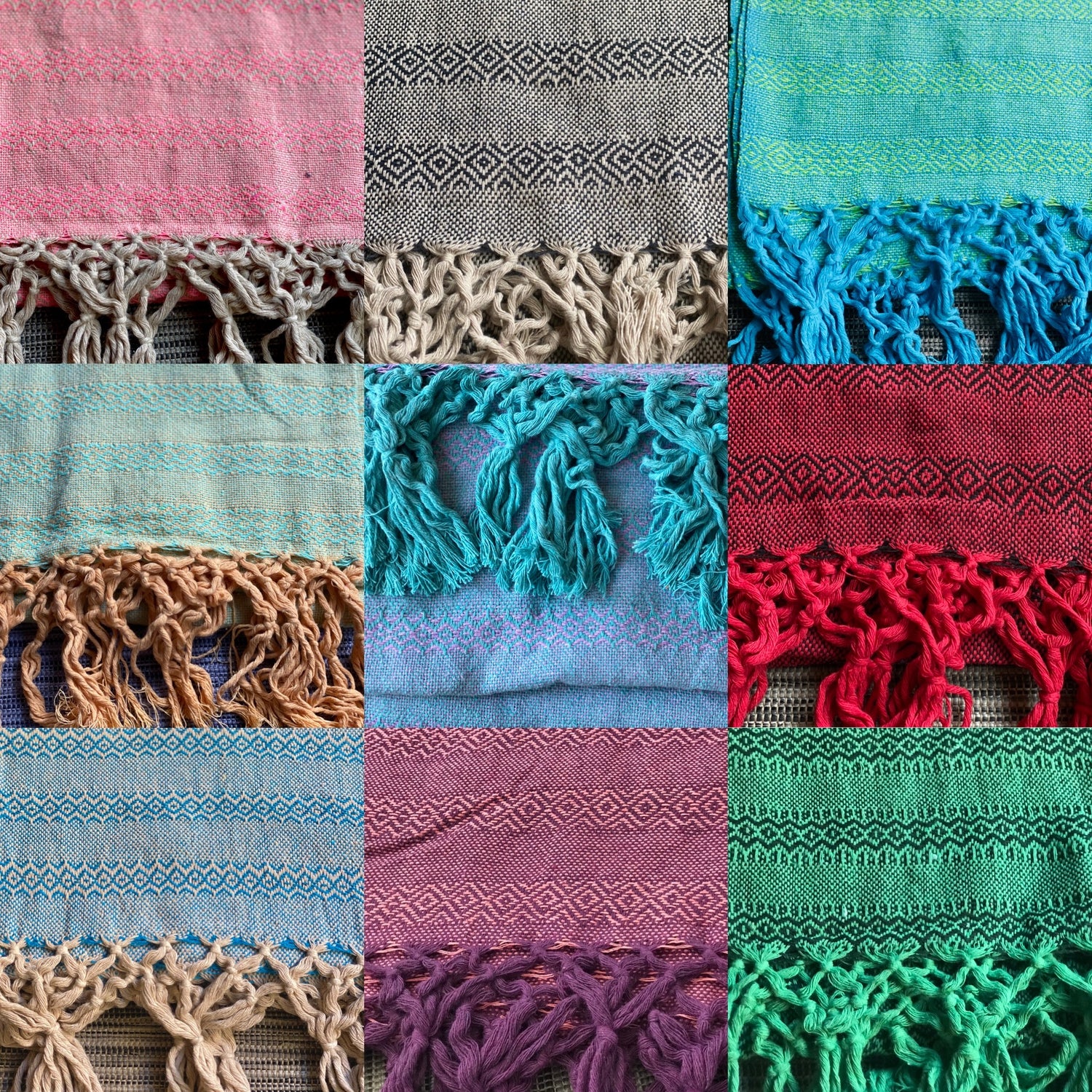
I sell pedal-loom cotton. About twenty-nine to seventy dollars, depending on length. That band is not an accident, and it is not a clearance sticker. It is the price of a working rectangle a mama or a doula can put in a birth bag without treating the purchase like a museum loan. Soften it with wash. Hang it on the line. Pack it again. If you are afraid to get soap on the cloth, I sold you the wrong object.
Cotton is the fork. It breathes on a laboring body. It grips when you ask it to hold a hip or a baby. It goes through mild soap and air-drying without asking for a dry cleaner. Acrylic does a different job and often pretends to be this one. Collector silk does a beautiful job and asks to be stored. I am not running a souvenir stand, and I am not running a gallery. I am running a shelf of cloth people will actually use.
I will not invent weavers or towns for you in this letter. The cloth comes from foot-pedal looms in Mexico. When I can name people and places with their blessing, I will. Until then, the honest sentence is fiber, loom, length — not a fake village on a hangtag. Pedal-loom cotton, woven as a finished rectangle with fringe that belongs to the cloth. That is what ships.
Wednesday is a founder note, not a size chart. The price also keeps the cloth in the room where decisions happen. A doula buying two 98-inch pieces for a kit. A mama choosing 118 because she is taller. Someone waiting for the long wrap because the short Fire & Snow is gone and I will not invent stock. If the only “rebozo” you can afford is a seventeen-dollar acrylic shawl, that is a real problem in the market — and dressing it up as heritage does not fix it. My answer is cotton in a band you can reach, not a five-hundred-dollar piece that sits in a drawer.
If you want the buying order written calmly — length first, fiber second, weave by feel, color last — that lives on the school, not in this journal: How to choose a rebozo. Read it when you are deciding. Come back to the shelf when you are ready to put cloth in a box.
What is on the shelf today is still cotton you can wash. Start at the collection if you already know your length: rebozos on the shop. Skip anything that asks you to treat a working tool like heirloom silk. That is the whole founder note. I priced this cloth so you can use it.
— Denisse